


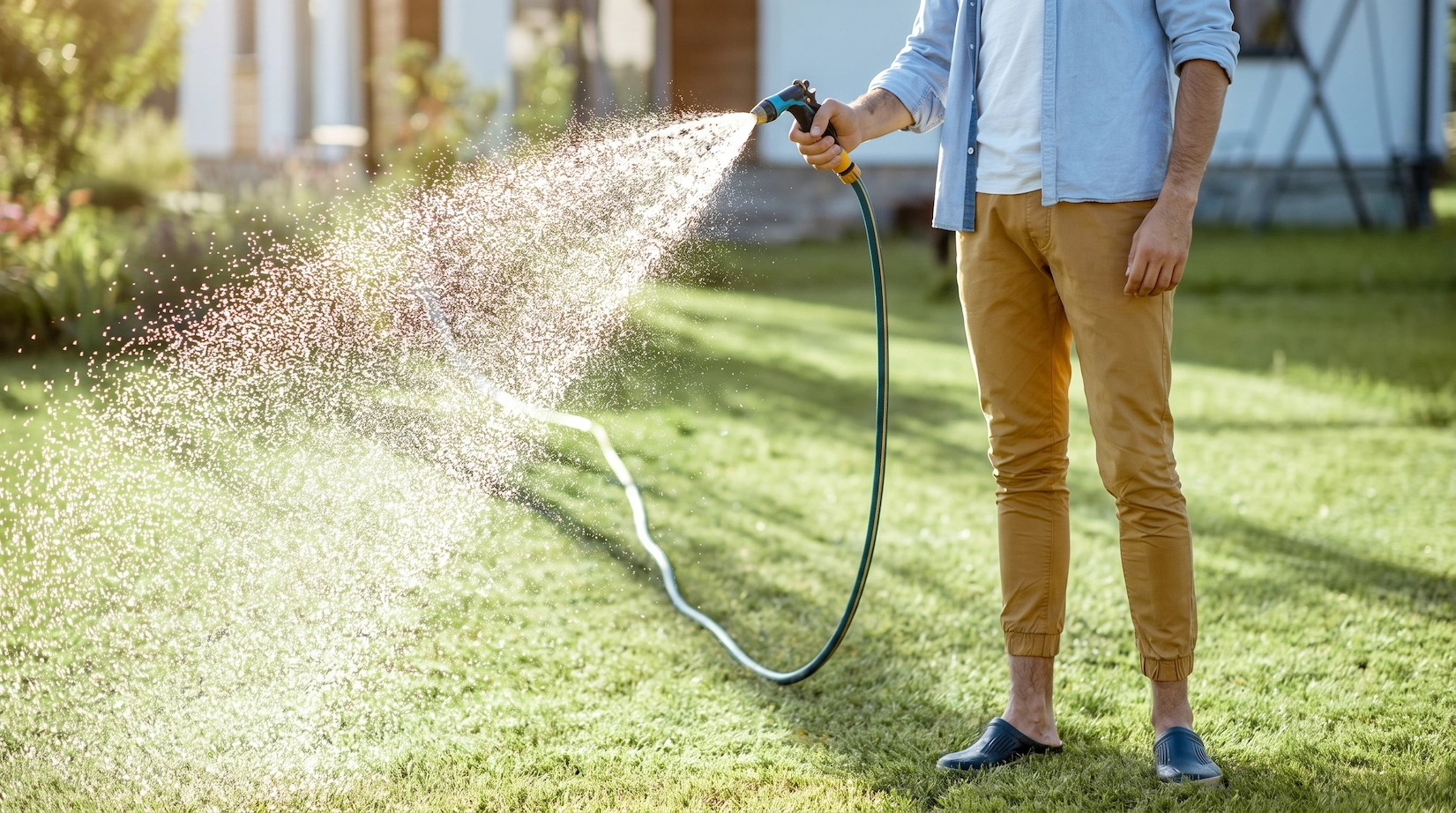
Effective Lawn Irrigation Techniques
Watering seems like the simplest part of lawn care — turn on the sprinkler, walk away. But improper watering is one of the most common reasons lawns underperform, and in many cases, homeowners who water more end up with worse lawns. Here’s how to get it right.
The Golden Rule: Deep and Infrequent
Your lawn needs roughly 1 to 1.5 inches of water per week during the growing season, including rainfall. The key is how that water is delivered. Frequent shallow watering — ten minutes every day — keeps only the top inch of soil moist. Roots grow where the water is, so shallow watering trains shallow roots, and shallow-rooted lawns are the first to brown out in a July dry spell.
Instead, water deeply two to three times per week. Each session should moisten the soil 4–6 inches down. This encourages roots to chase water deeper into the soil, building a lawn that can ride out dry stretches without panicking.
Quick test: Set a few empty tuna cans on the lawn while the sprinkler runs. When they’ve collected half an inch, note the time — that’s your benchmark per session.
Water Early in the Morning
The ideal watering window is 4 a.m. to 9 a.m. Morning watering gives the lawn time to absorb moisture before the heat of the day evaporates it, and the grass blades dry off as the sun rises.
Evening watering is the mistake to avoid. Grass that stays wet overnight is an open invitation for fungal diseases like red thread, dollar spot, and brown patch — all common in humid New England summers. If you’re seeing mysterious patches or pinkish threads in your turf, your watering schedule is one of the first things to check.
Know Your Soil
Seacoast-area properties range from sandy soils that drain almost instantly to heavier soils that hold water. Sandy soil may need shorter, slightly more frequent sessions because water passes through quickly. Heavier or compacted soil may need “cycle and soak” watering — running a zone for 10 minutes, pausing 30 minutes to let water absorb, then running again — to prevent runoff. If water is streaming into the street after 10 minutes, that’s your sign.
Signs You’re Overwatering
More lawns are harmed by overwatering than underwatering. Watch for:
- Spongy, squishy turf hours after watering
- Mushrooms popping up regularly
- Fungal disease patches
- Weeds that love wet feet, like nutsedge, moving in
- A lawn that wilts quickly despite constant watering (a sign of weak, oxygen-starved roots)
Signs of Drought Stress
On the flip side, a thirsty lawn shows a dull, blue-gray cast, footprints that stay visible instead of springing back, and folded or curled grass blades. Catch it at this stage and a deep watering brings it right back.
One More Thing: Dormancy Isn’t Death
If you choose not to irrigate in peak summer, cool-season grass will go dormant and turn brown. That’s a survival mechanism, not a dead lawn — a healthy, well-fed lawn can stay dormant for several weeks and recover fully when rain returns. The lawns that don’t bounce back are the ones with weak root systems, which is why fertilization, aeration, and smart watering all work together.
Questions about why your lawn isn’t responding the way it should? We’re happy to take a look.

